
Divine Non-Intervention
How Pax Dei’s Most Ambitious Systems Were Lost During Development

On January 14, the developers of Pax Dei addressed the community with an explanation of their initiative to change the principles of trade. The announcement triggered a wave of criticism and forced the developers to postpone its implementation — though not to abandon the idea itself. As their main argument in defense, they pointed to something we have been discussing for over a year: trading spaces near Petra Dei are granted disproportionately strong advantages while, at the same time, being unable to accommodate everyone who wants to use them.
But how did Petra Dei become such a crucial element of the world — to the point of pushing the developers toward unpopular decisions?
According to the lore, Petra Dei is a carved stone stele of divine origin that ensures the safety of the valley’s inhabitants — the Peace of God. Pax Dei, in Latin.
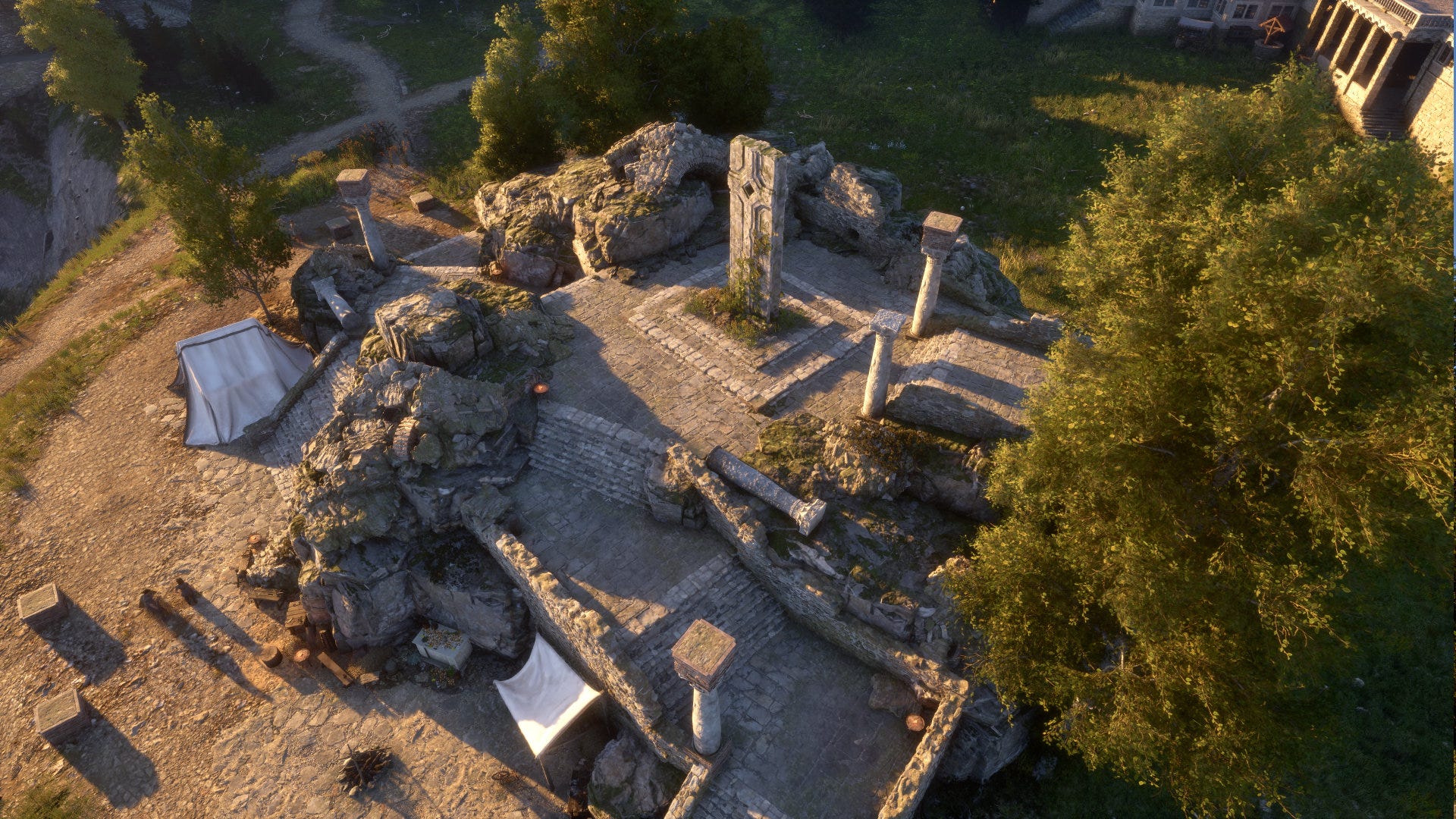
At first, Petra Dei was nothing more than a material embodiment of the world’s history as described in ancient scrolls. And although those texts spoke of saints, demons, and divine intervention, in this article we will not pretend that we do not understand who the true gods of this world really are — its developers.
It is the developers who invent every law of their world. It is they who assign importance to certain elements or strip influence from others. But does this mean that when the true gods say Petra Dei now dictates their decisions, they are merely deflecting responsibility? Not entirely.
If gods act in a human manner — replacing a clear plan with an accumulation of temporary solutions — they can indeed become hostages to the situation they create. Still, the story of the creation of Pax Dei is far more complex, because it is not only about where we arrived on January 14, but also about what we have moved away from over time — perhaps forever.
Religion as the Primary Force of the Peaceful Community
The concept of the world of Pax Dei originates from the idea of free construction in a shared space. An ambitious technology makes possible something that almost no one could previously afford: hundreds of structures composed of thousands of elements existing within a single space. Villages, castles, entire cities of breathtaking beauty. But what is the purpose of all this?
It must be acknowledged that the gods had one particularly compelling idea — one that personally captivated me. In addition to the now-familiar feudal conflict, they decided to give religion a significant role in their world. The balance was envisioned such that for every feudal lord, there would be a bishop.
Saying this is easy; implementing it is far more difficult. How many times have we seen peaceful players in virtual spaces left with nothing to meaningfully oppose violence? And what, exactly, could religion offer them? Details were scarce, but one fleeting remark in an interview deeply inspired me, turning a single short phrase into an entire conceptual picture.
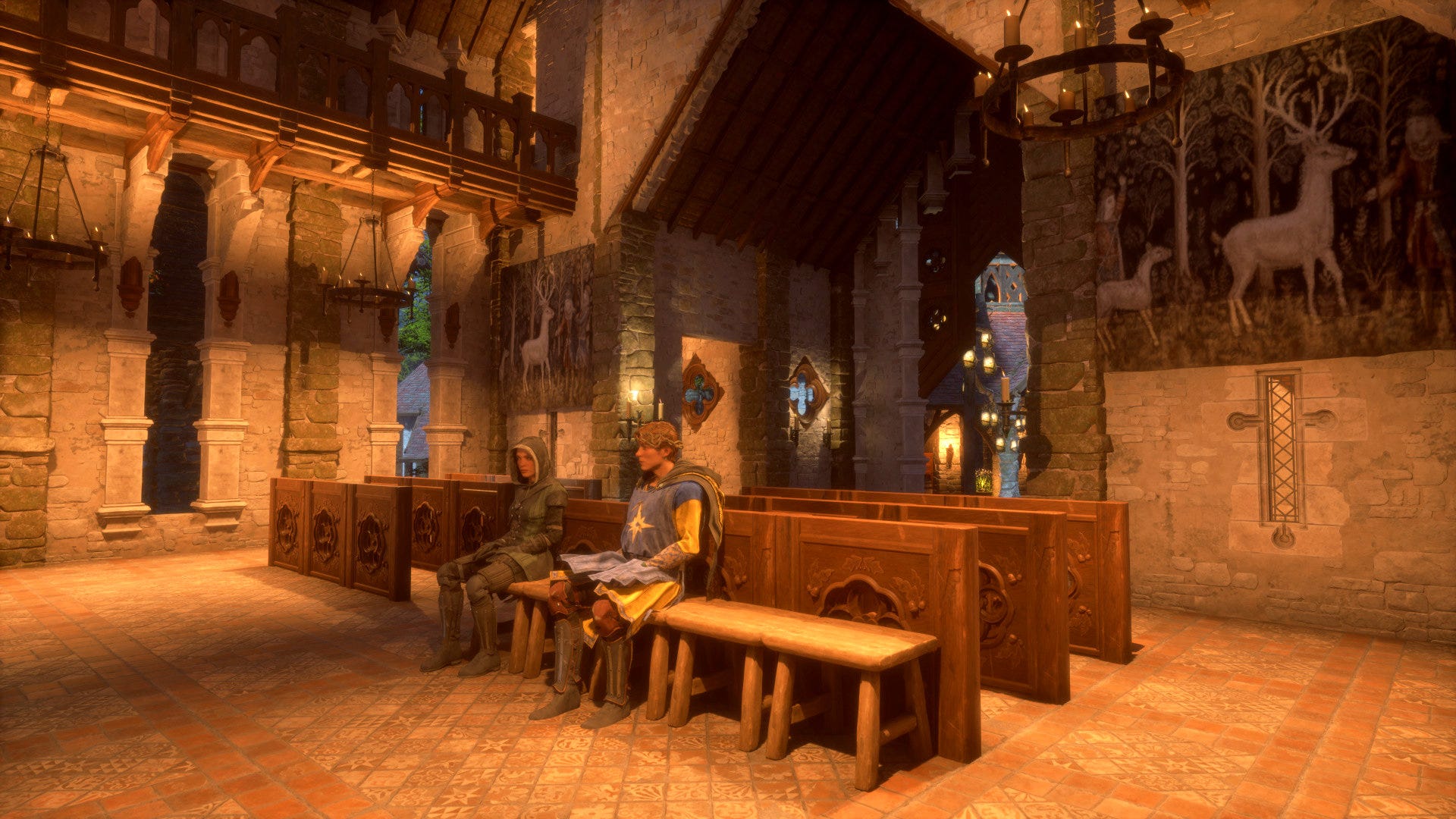
The video of that interview has unfortunately since been removed. Still, I will try to convey the essence of the idea. The world of Pax Dei is vast, and the only way to move quickly across it was meant to be a Miracle — one available exclusively within the bounds of an Altar. However, for this Miracle to function, it required Grace, a resource that Altars were meant to store, forming a working teleportation network. Without sufficient Grace, an Altar would cease to function as a teleport point.
Grace itself would be generated when parishioners prayed within a specific Parish, receiving divine blessings and, in the process, filling a particular Altar with a portion of Grace. Thus, the more parishioners there are — and the more actively they seek blessings for their peaceful activities — the more Miracles an Altar can afford to perform.
This is my free interpretation of what was said in that interview, and what follows goes even further and shifts into speculation. But even if you were to say, “The gods never meant anything like that,” my answer would be simple: “What stopped them?” What I see aligns fully with the core promises they made.
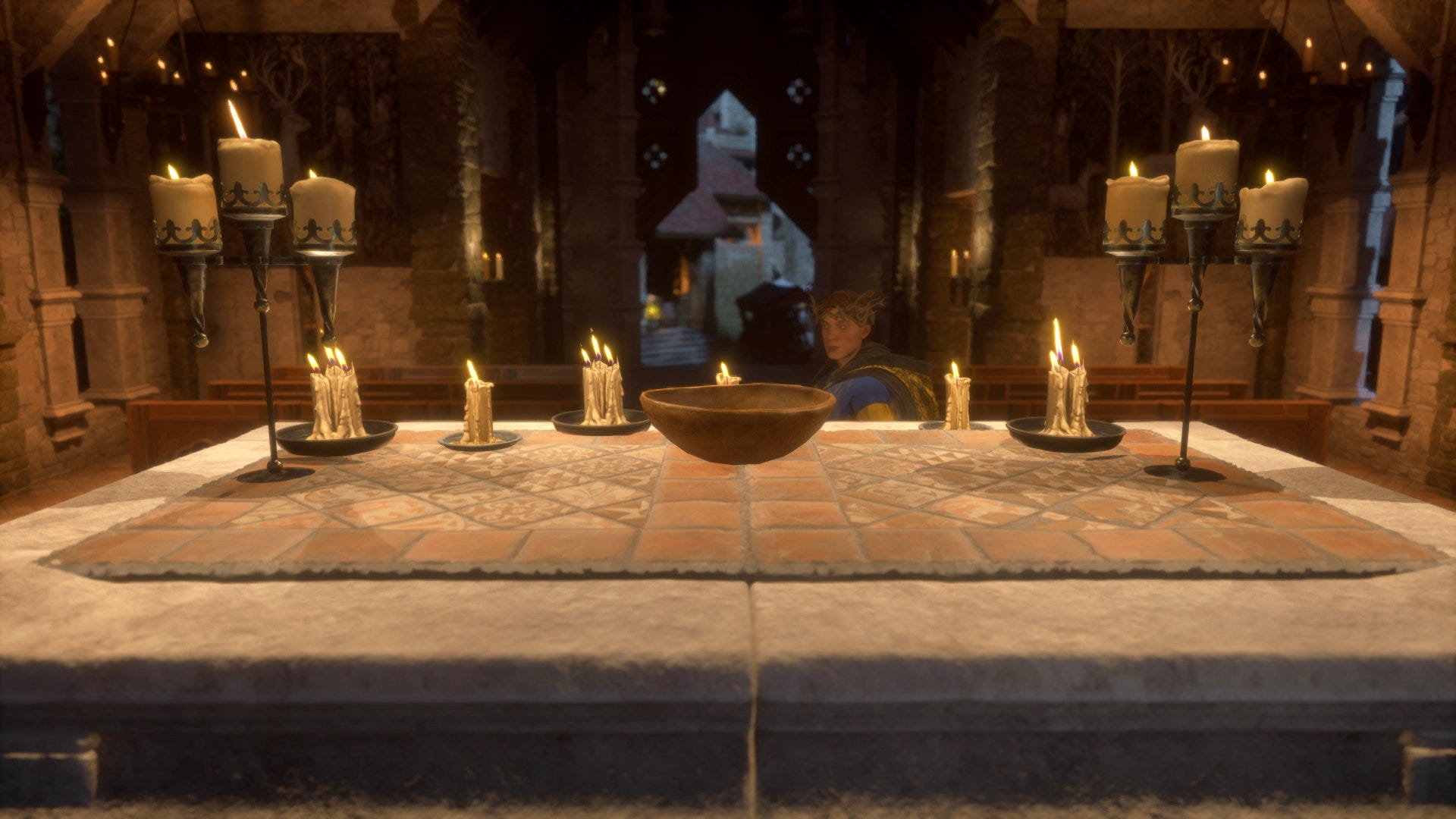
We were promised a “Social Sandbox.” Now imagine that the inhabitants of Pax Dei are not only required to unite around a shared set of beliefs of their own creation, but also to seek supporters of that idea across the entire world. After all, a single Altar — even one filled to the brim with Grace — will not take you anywhere on its own. What is needed is a network of Temples at the heart of civilization and Monasteries on the frontier.
The more popular a religion becomes, the more distributed its teleportation network grows — and the more invested feudal lords become in its favor. The “excommunication of a feudal lord,” in the event of a conflict between a peaceful community and a feudal army, could have truly painful consequences for feudal forces. They would lose access to the fast-travel network.
Religion as a Driving Force of Free Architecture
I began by noting that we already have a vast number of beautiful structures whose function goes no further than being “containers for containers.” With the described religious systems and teleportation built upon them, Temples and Monasteries become the primary remedy for the problem of “meaningless construction.”
Monumental architecture has always sought to visualize the power of religion. An Altar of significant size — effectively a teleportation platform — must be surrounded by an even larger structure. That structure should signify affiliation with a particular religion, serve as a visual dominant and landmark for existing parishioners, and act as a beacon for potential ones.
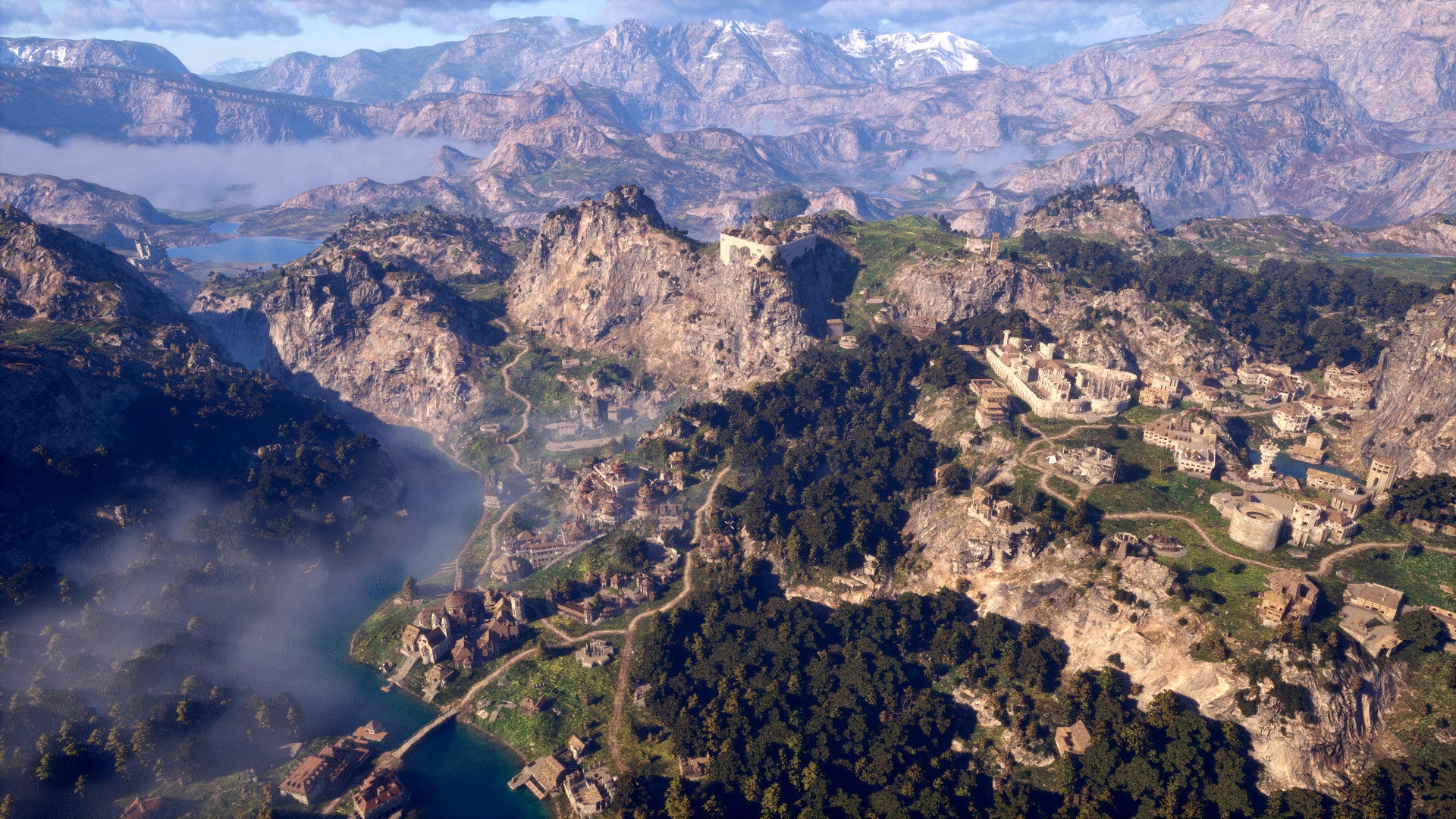
If blessings can only be obtained at an Altar, it is logical to settle near a Temple. Alternatively, it makes sense to build a new Temple where many people have already settled. After all, an Altar without parishioners will not be replenished with Grace.
Naturally, Altars could also grant access to other Miracles of interest to both feudal lords and peaceful residents, but even a single vivid example of religion’s tangible power is sufficient for now.
In Pax Dei, as is well known, structures can be built anywhere within a valley. Any religion can be invented. The result could have been a true “Social Sandbox” with vibrant life visualized through architecture, where no two worlds look alike — exactly as the local gods intended.
Gods Who Lost Their Way
But wishing alone is not enough. One must strive to realize that vision. Instead, the gods of Pax Dei initially chose to grant the central stone of each valley — Petra Dei — a magical function: the ability to return to it from anywhere in the world. This was the first strange decision.
I understood that the world was still very young and required temporary solutions while awaiting the introduction of fully developed laws. But why not allow players to build such a stele anywhere and bind their return to it? And if that was beyond the reach of these young gods, why not at least allow players to teleport to their own plots?
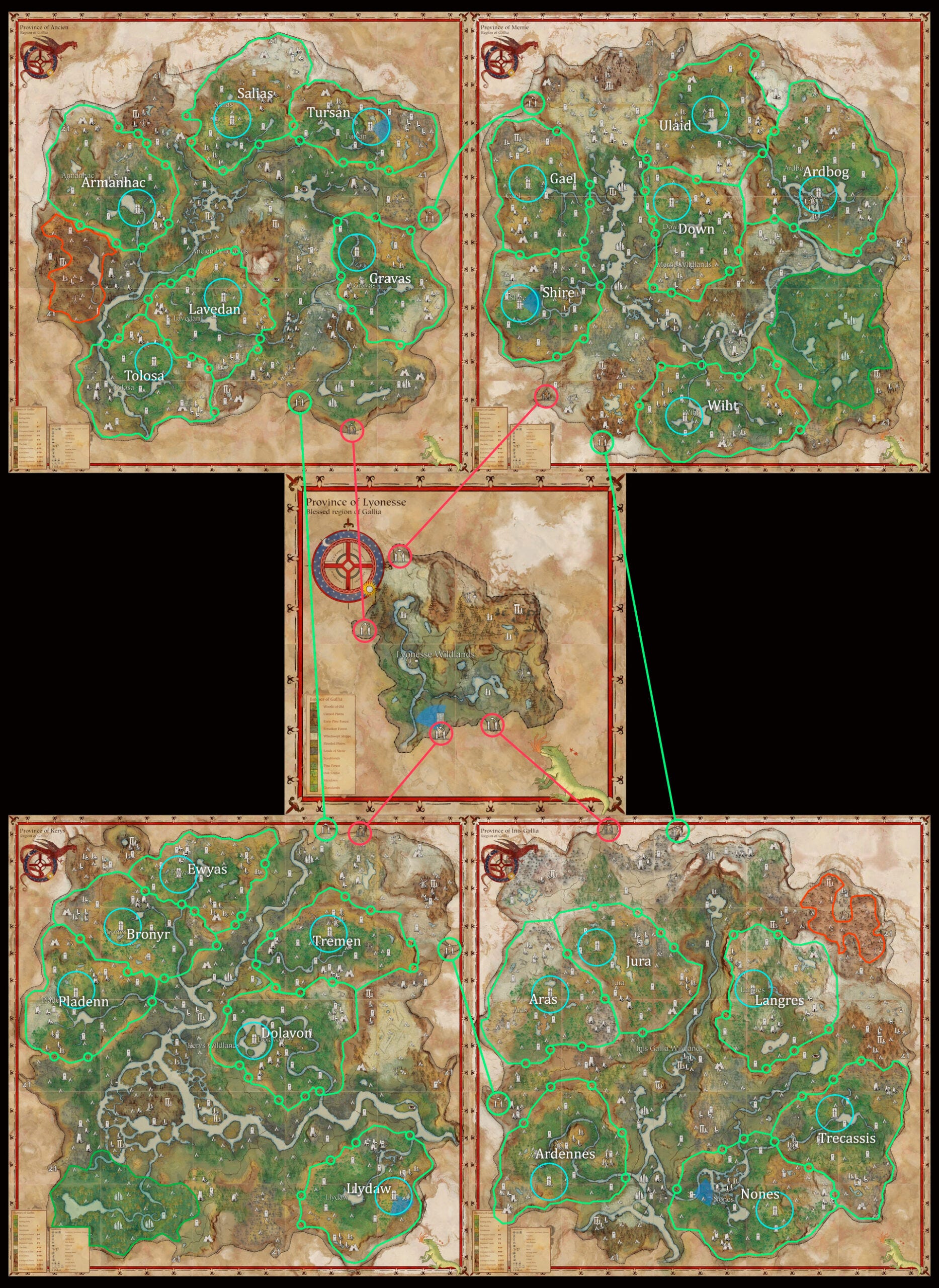
Any of these options would have been better than forcing everyone to return to the central Petra Dei, because that choice made the space around the stele overwhelmingly attractive for local trade and everyday activity. Peripheral areas of the valleys still retained some trading opportunities thanks to neighboring valleys. After all, binding oneself to the central stele only makes sense for residents of that specific valley.
Then, suddenly, the gods of Pax Dei introduced teleporters, with a network formed from the central steles of each valley. Now, anyone who had visited the Petra Dei of a given valley even once could teleport there at any time. At that moment, the peripheral areas of the valley lost what little commercial appeal they had left.
Even then, I thought this might be a temporary — albeit deeply flawed — solution. That assumption lasted until the announcement of new approaches to trade that rendered market square and the settlements around them meaningless.
Where Did We End Up?
First came the developers’ unsuccessful decision to bind all residents of a valley to a single central stele for fast returns home. Then came the teleportation network based on Petra Dei. And finally, trade was reshaped to fit the reality created by those decisions. This suggests that these choices are no longer considered temporary.
Had player-built Altars — filled with Grace through blessings or donations — become the foundation of the teleportation network, we could have ended up with a completely different reality, one without the problem now used to justify a major deterioration of trade systems.
Such a reality would have aligned far more closely with the developers’ promise to create a Social Sandbox MMO. Moreover, it could have delivered a truly unique gameplay experience found nowhere else: competition between belief systems around which players would unite, competition through architecture, and competition in daily activity — without which an Altar becomes nothing more than an empty shell devoid of resources.
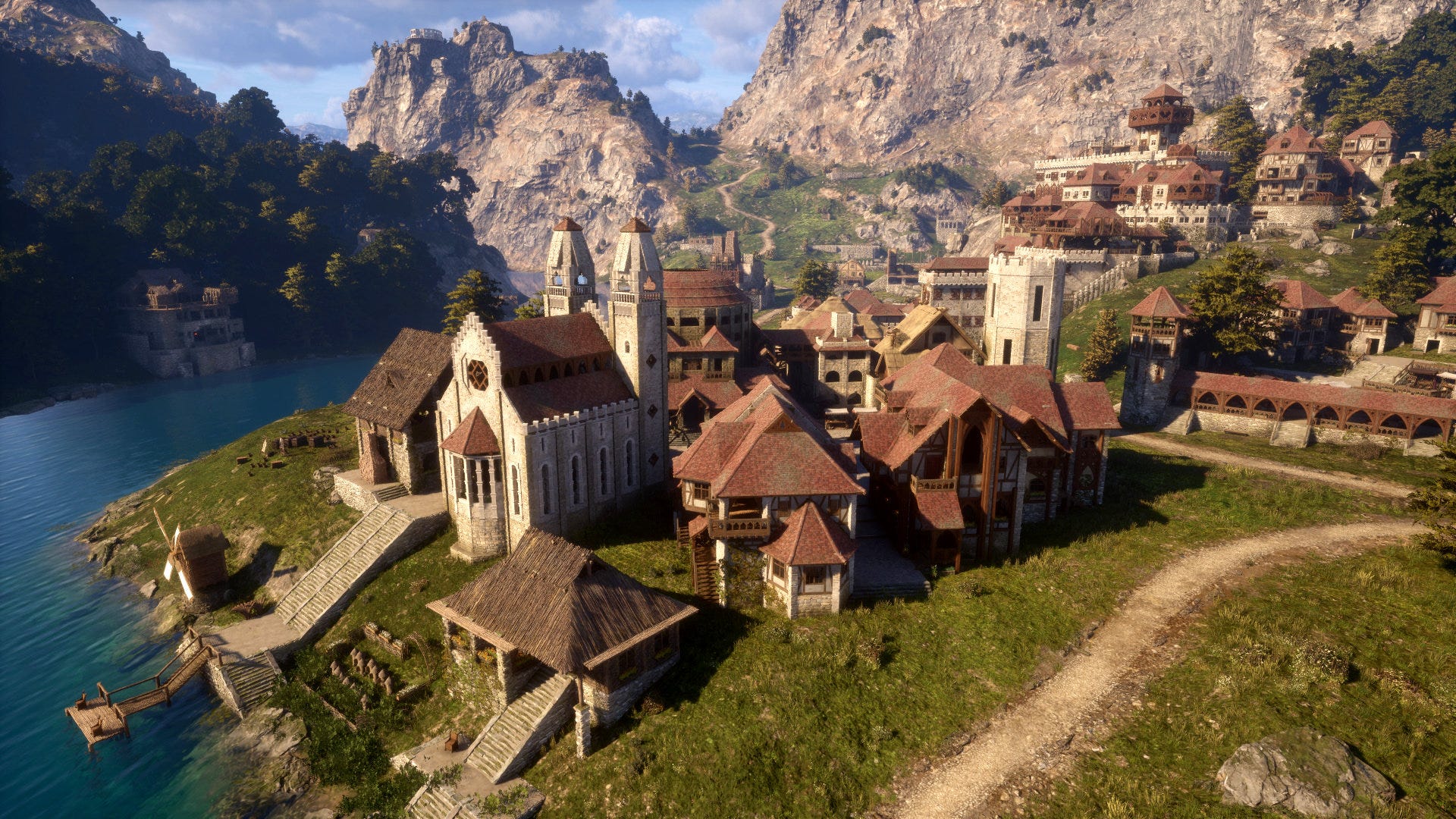
Most importantly, we would have achieved mutual influence between peaceful communities united around ideological leaders and combat-focused communities united around feudal lords. In other words, solutions to many problems — including those for which we long struggled to find answers — were possible and broadly envisioned by the creators of Pax Dei. Yet this path was not taken. As if, holding immense power in their hands, the gods chose inaction.
Religion is a concept built on unconditional faith in a higher intelligence and plans beyond mortal comprehension. In a virtual world, this is literally true: only its creators know what they are doing and why. But precisely for that reason, they bear responsibility for their actions — or their inaction.
The situation with teleportation, and later with trade, in Pax Dei looks like a steady movement along the path of least resistance. It increasingly resembles a policy of divine non-intervention — one that makes the situation worse with each passing day.
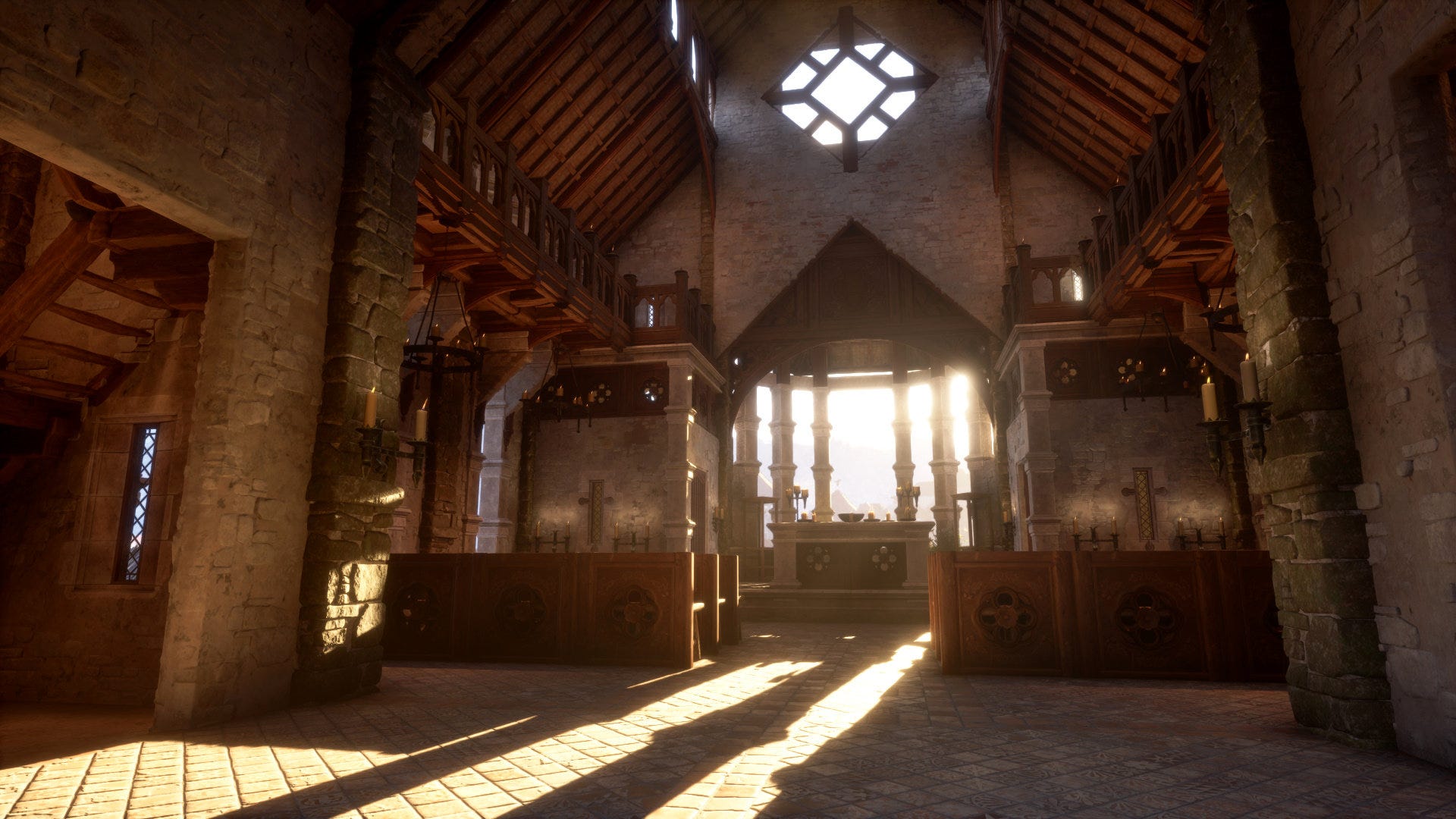
Creating an entire world with all its laws is a process whose complexity should not be underestimated. Those who joined the observation of creation at an early stage should exercise patience. I genuinely tried to do so. But what I see in Pax Dei now does not look like development. Quite the opposite — it looks like entirely unnecessary degradation.
Faith is not an infinite resource. Faith is sustained by concrete events — or even by miracles. And no matter how beautiful the shell of a Temple may be, what truly matters is what happens at its Altar.
By failing to realize the brilliant idea of Altars within a free social sandbox, the world of Pax Dei risks becoming an empty structure without parishioners and, therefore, without inner energy, if divine non-intervention continues. Yet we are all human, and that means we possess an irrational faith in miracles even when there is no reason for it at all.